|
Things you should do
|
Remind any doctor, dentist or pharmacist you visit that you are taking NOCDURNA.
If you are going to have surgery, tell the surgeon or anaesthetist that you are taking
this medicine. It may affect other medicines used during surgery.
|
|---|---|
|
Things you should not do
|
Do not take NOCDURNA to treat any other complaints unless your doctor tells you to
do so.
Do not stop taking your medicine or lower the dosage without checking with your doctor.
If you stop taking it suddenly, your condition may worsen.
|
|
Driving or using machines
|
This medicine is not expected to affect your ability to drive a car or operate machinery.
|
|
Looking after your medicine
|
Keep NOCDURNA sublingual wafers in their original container in order to protect from
moisture and light, until it is time to take them.
Store it in a cool dry place, where the temperature stays below 25°C, away from moisture,
heat or sunlight.
|
Do not take NOCDURNA if:
Check with your doctor if you:
Pregnancy and breastfeeding
How much to take
When to take
How long to take NOCDURNA
How to take NOCDURNA
1. Completely remove the end tab of a blister strip by tearing along the perforations, starting from the corner with the hand symbol.
2. Now remove one blister from the strip by tearing along the perforations.
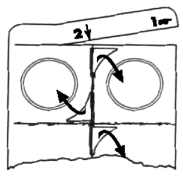
3. Remove the foil on each blister, starting at the corner with the printed arrow, by peeling off the foil in the direction of the arrow. Do not push the tablet through the foil.
4. Carefully take a tablet out of its blister. Place the tablet under the tongue and allow it to dissolve. Do not chew or swallow the tablet.
5. If a tablet breaks into more than two pieces while you are taking it out of its blister, do not take the broken pieces. Take a tablet from another blister.
If you forget to take NOCDURNA
If you take too much NOCDURNA
(by calling 13 11 26), or
Things you should do
Things you should not do
Things to be careful of
Things to be aware of
Driving or using machines
Looking after your medicine
Getting rid of any unwanted medicine
Side effects
|
Side effects
|
What to do
|
|---|---|
|
Very common side effects (affects one or more in 10 users):
dry mouth.
Common side effects (affects less than 1 in 10 users):
diarrhoea
dizziness.
Hyponatraemia or low sodium levels in the blood may have the following signs or symptoms:
headache
stomach (abdominal) pain
nausea.
Hyponatraemia can potentially become a serious side effect, see below.
Uncommon side effects (affect less than 1 in 100 users):
weakness (fatigue); generally feeling unwell
stomach (abdominal) discomfort
constipation.
Side effects (unknown frequency):
muscle cramps
|
These side effects are not usually serious but can become serious.
Speak to your doctor if you have any of these less serious side effects and they worry
you.
|
Serious side effects
|
Serious side effects
|
What to do
|
|---|---|
|
*Hypersensitivity or allergic reactions:
shortness of breath, wheezing or difficulty breathing
swelling of the face, lips, tongue or other parts of the body
rash, itching or hives on the skin.
* This side effect is very rare
Anaphylactic reaction - a sudden life-threatening allergic reaction. The frequency of this side effect is not known.
Hyponatraemia or low sodium levels in the blood may have the following serious signs
or symptoms (common – affects less than 1 in 10 users):
confusion, drowsiness or decreased consciousness
severe or prolonged headache
nausea or vomiting
rapid weight gain or swelling of hands, ankles or feet (peripheral oedema), which
may be due to a build-up of water in the body
convulsions and coma
|
Call your doctor straight away, or go straight to the Emergency Department at your
nearest hospital if you notice any of these serious side effects.
|
Reporting side effects
What NOCDURNA contains
|
Active ingredient
(main ingredient)
|
desmopressin (desmopressin acetate)
|
|---|---|
|
Other ingredients
(inactive ingredients)
|
gelatin
mannitol
citric acid
|
|
Potential allergens
|
contains sulfites and fish products
|